
OMS Kit
Plus other OMS trivia

Before Shuttle started doing Direct Insertion to get to orbit (requiring only one OMS burn), there was the idea of adding extra OMS propellant to the payload bay. It was never built, but they still have the controls for the “OMS kit” on the flight deck.
(By the way, OMS stands for Orbital Maneuvering System. These hypergol engines were used for orbital burns, including deorbit.)
You can see the controls and their location in the flight deck here:
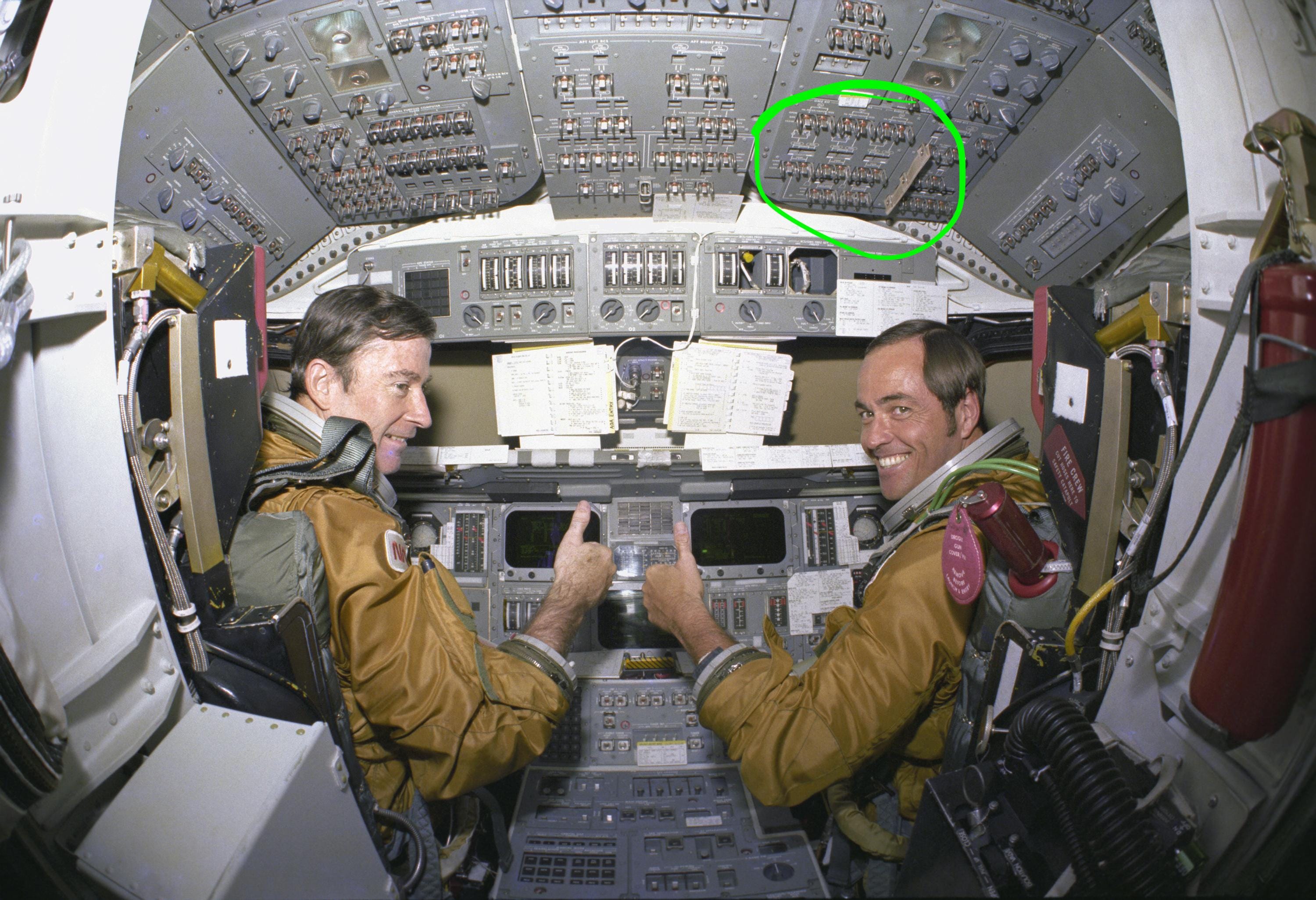
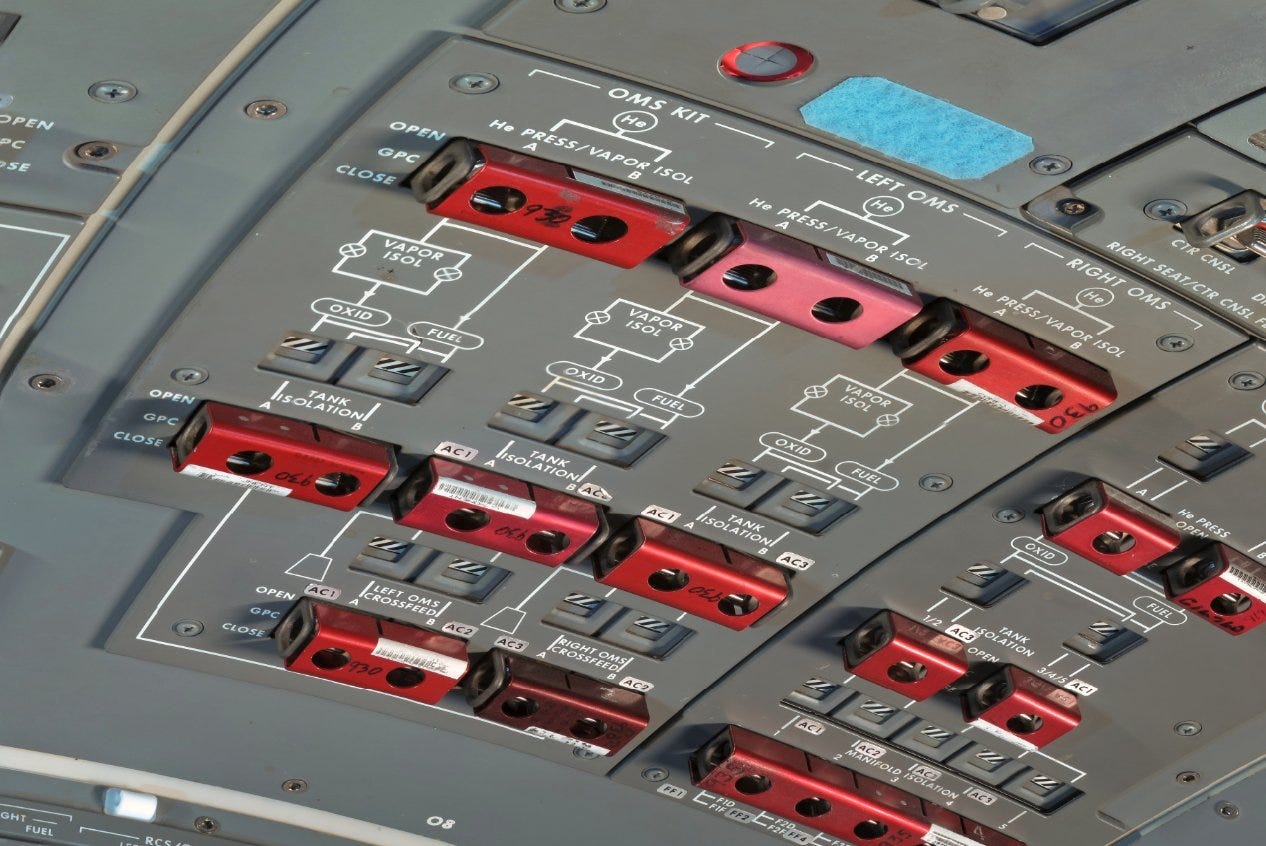
There are three columns in overhead panel 8, one for the OMS kit, one for the Left OMS pod, and one for the Right OMS pod. The OMS kit switches are inactive.
In general, the top switches are for the Helium tanks. There are two redundant tanks in each pod (A and B), and would’ve been a pair for the OMS kit, too, evidently. Their valves that reach the propellant tanks are held closed by springs, and can be opened by solenoids.
The switches can be OPEN, CLOSE, or controlled automatically by the shuttle’s computers (GPC, general purpose computer). Normally they’re always closed outside of OMS burns, at which point they’re switched to GPC, so that the computer opens them before the burn and closes them right after.
There’s an interesting note in the Shuttle Crew Operations Manual (SCOM) as well: “When manually opening the He PRESS/VAPOR ISOL switches, delay 2 seconds between opening the A and B valves. This will prevent a possible water hammer effect due to a large and sudden pressure change.” Makes sense.
The bottom switches are for the crossfeed - I’ll have to write about it separately some day, but since the Reaction Control System (RCS) thrusters use the same propellant as the OMS pods, the fuel can be shared to an extend.
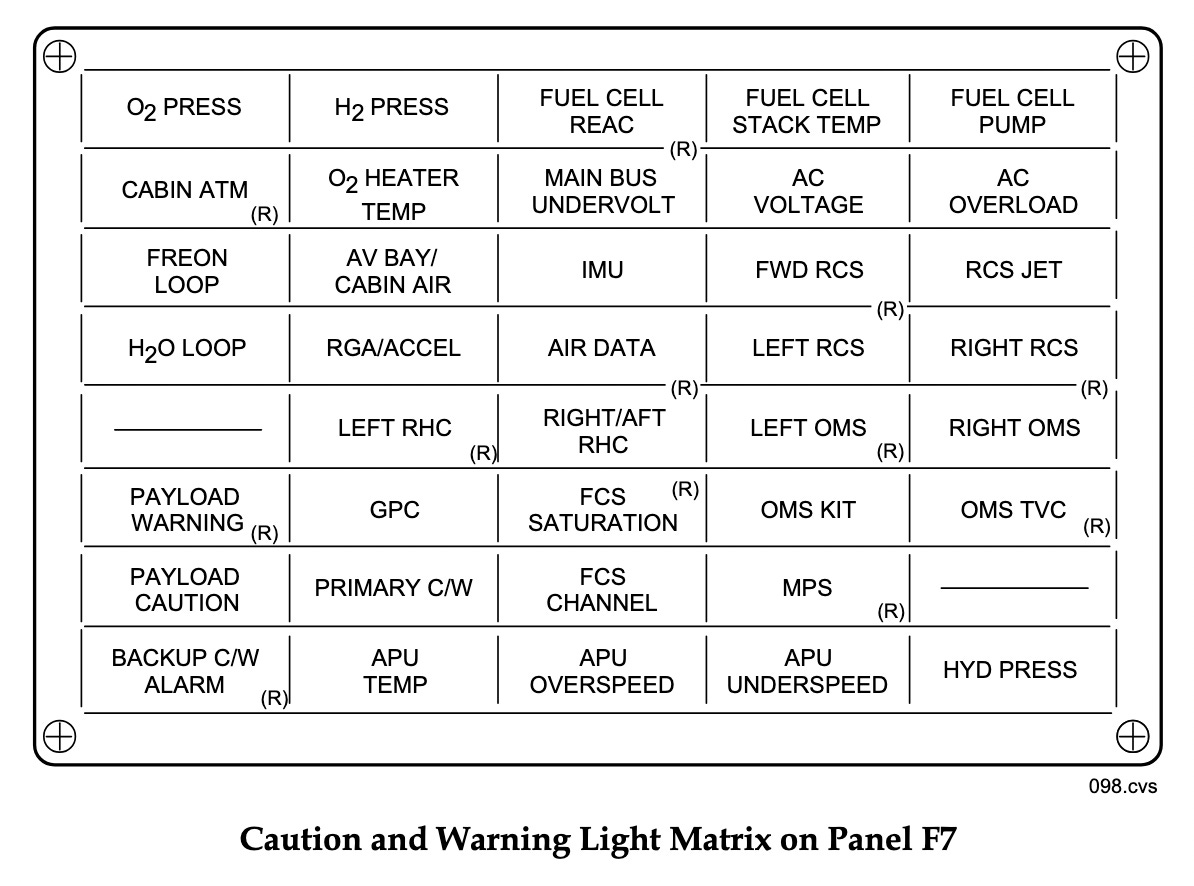
The OMS kit warning light would go on for the following reason: “OMS KIT (Y): Indicates detection of an OMS kit oxidizer or fuel tank ullage pressure out of limits. The hardware channels are 77 and 87 for oxidizer and fuel respectively.”
The SCOM also references that switches and gauges for the OMS kit “appear throughout the orbiter”, so I might need to update if I find wherever else they appear!
Here’s what the OMS kit itself would’ve looked like. The additional propellant would’ve been stored in the aft end of the payload bay. (Essentially the same place where the Extended Duration Orbiter pallet goes.)
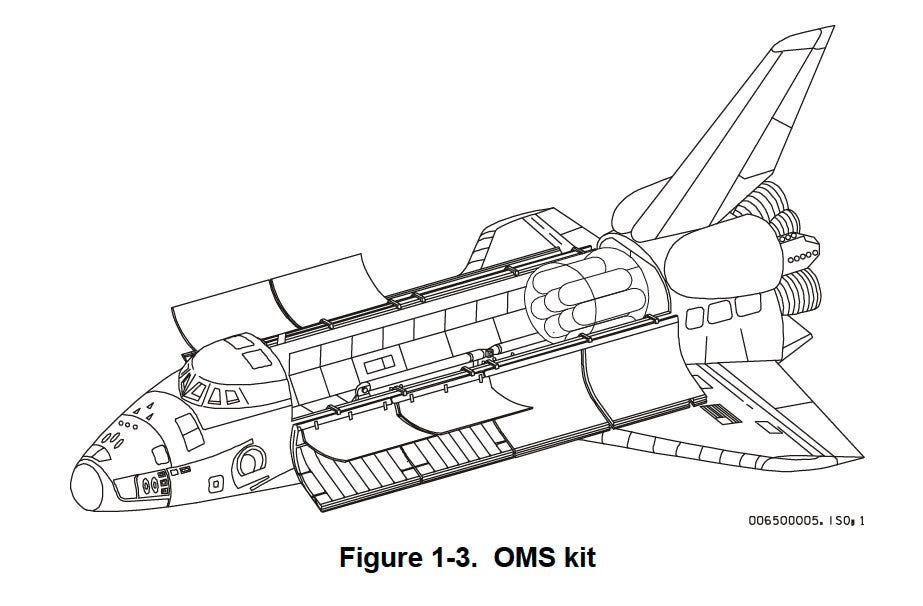
In all yet another very neat system that wasn’t built. I love that the switches remained, though!
Additional OMS trivia:
Before settling on the name Orbital Maneuvering System (OMS), they were called the “APS Protuberances” (Auxiliary Propulsion System), a naming holdover from the Saturn V days.
Based on a talk I heard in 2021, during STS-2 they learned that some tiles were lost from the OMS pods, but not because of in-orbit imaging or inspection, but rather they were so worried about that possibility that the director sent people to look for tiles washing up on the beach, and sure enough, found some!
Sources: